Skip to content


The government has announced the new minimum wage rates that will come into force from 1 April 2026.
The new rates are as follows:
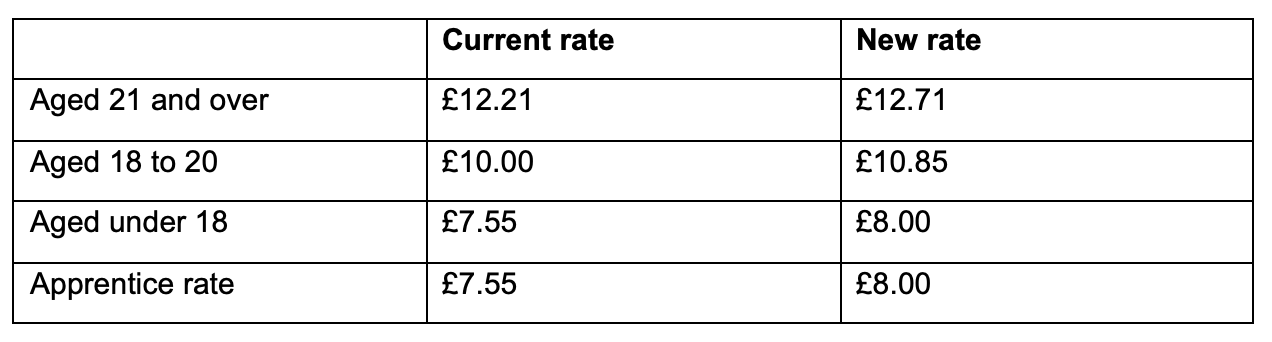
The new rates mean that workers aged 21 and over will get a 4.1% increase. It is estimated that 2.4 million workers will benefit from the rise, with a further 300,000 apprentices and workers aged under 21 being given a rise of between 6.0% and 8.5%.
The larger rise for younger workers is part of the government’s efforts to work towards having a single rate for workers regardless of age.
What should you do about this?
Budgeting for these additional costs from 1 April 2026 will be important, especially if you have plans to hire staff. The earlier you prepare, the better. Here are some key steps you can take:
- Review your payroll: Check which employees will be affected by the new rates.
- Update budgets and forecasts: Factor the higher wage costs into your cash flow planning from 1 April 2026 onwards.
- Consider pricing and productivity: Can you absorb the higher costs within your current prices, or do they need to be uplifted to maintain profitability? Are there adjustments you can make to the work staff are doing or their efficiency that could reduce staffing needs in the coming year?
- Check for knock-on effects: These wage increases may create pressure to adjust pay for employees who are paid above the minimum rates. Consider whether you need to review other salaries to maintain fairness and morale.
If you would like help modelling the impact of these changes or planning for April, just let us know. We can look at your numbers together and ensure you are prepared.