HLAS

Home>Harris Lacey & Swain

About Harris Lacey & Swain

This author has not yet filled in any details.
So far Harris Lacey & Swain has created 2142 blog entries.

Supporting Hull Foodbank

At Harris Lacey & Swain, we are proud to announce our support for the Hull foodbank. We are always keen to raise awareness of local good causes and help out in the community wherever we can. This blog post will provide you with more information about Hull foodbank and why it is so important to our area. Why do we need a food bank in Hull? Some people in the UK struggle to put food on the table and feed their families. This issue has only been made worse by the pandemic, as people suffer from job losses and bankruptcy. [...]

By |November 12th, 2020|Blog|

Work from Home tax relief

Home workers could claim tax relief The ongoing Covid-19 pandemic has seen many employees swap the office for home working. If you’ve asked your employees to work from home for safety reasons, they may be entitled to claim tax relief on any additional household expenses they’ve incurred. They can claim if they work at home regularly, either for the full week or for part of the week, including if they have to work from home because of Covid-19. What additional costs are included? Tax relief can be claimed if additional costs are incurred as a result of the employee being [...]

By |November 5th, 2020|Blog|

What are the advantages of Cloud Accounting?

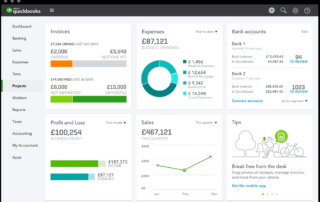
Cloud accounting is becoming more popular as technology develops, and with good reason. Whether you're a business owner, self-employed, or you just want to maximise the efficiency with which you handle your finances, the accounting software has many benefits to offer. Here are just three of the many reasons you should contact Harris Lacey & Swain to learn more about cloud accounting. Making great savings Cloud services can offer you savings in many different ways, but the two most important savings you stand to make are time and money. Using the cloud saves time because it allows you to access [...]

By |November 5th, 2020|Blog|

Job Retention Scheme (CJRS) has been extended

Job Retention Scheme (CJRS) has been extended; Job Support Scheme (JSS) Postponed Following the announcement by the Prime Minister on the 31 October regarding the new lockdown in England for the commencing 4 November, the CJRS has been extended until December. The Grant will ensure employees receive 80% of their current salary for hours not worked, up to a maximum of £2,500. Businesses will have flexibility to bring furloughed employees back to work on a part time basis or furlough them full-time, employers will be asked to cover National Insurance and employer pension contributions. As with the current CJRS, employers are [...]

By |November 2nd, 2020|Blog|

Airbnb reporting property rentals details to HMRC

You may have seen in the newspapers that Airbnb will share data with HMRC about the earnings of hosts for property rentals (those who let out property) on its UK platform in the years 2017/18 and 2018/19. It is anticipated that HMRC will use this data to open enquiries into the tax affairs of individuals who have not declared letting income for 2017/18 and 2018/19. The deadline for opening an enquiry into a self-assessment return for 2018/19 is 31 January 2021, if the return was issued and submitted on time. The discovery rules allow HMRC to go back much further, [...]

By |November 2nd, 2020|Blog|

CGT Business Asset disposal relief lifetime limit just £1 million 

In the March 2020 Budget, it was announced that CGT Entrepreneurs’ relief (ER) was replaced by CGT Business Asset Disposal relief (BADR) for disposals on or after 11 March 2020. It was also announced that the 10% CGT rate would only apply to the first £1 million of qualifying gains in the taxpayer’s lifetime and many business owners have misinterpreted how this limit applies.  Unfortunately claims under the predecessor ER need to be taken into consideration so if £750,000 ER has already been claimed only the first £250,000 of qualifying gains after 11 March 2020 would qualify for BADR. Any [...]

By |November 2nd, 2020|Blog|

More time to pay Tax due on 31 January 2021

Those taxpayers who may have difficulty paying the tax due under self-assessment on 31 January 2021 can agree more time to pay with HMRC provided the amount outstanding is no more than £30,000. The government have already agreed that amounts due under self-assessment on 31 July 2020 could be deferred until 31 January 2021, but this latest announcement generally allows a further 12 months to pay. A key condition is that the taxpayer does not have any outstanding tax returns, no other tax debts, or other HMRC payment plans set up. The payment plan needs to be set up no [...]

By |November 2nd, 2020|Blog|

How do I pay my tax bill?

Paying your tax bill in a timely fashion is of the utmost importance. If you're a business owner or you're self-employed, you'll have to either pay self-assessment tax or corporation tax. Failure to do so could lead to fines, sanctions, and maybe even prosecution. But how do you actually pay your tax bill? Your ways to pay There are many ways to pay a tax bill, and it all depends on which you find the most convenient. Your options are: Online/telephone CHAPS (clearing house automated payment system) In person (bank/building Society) Postal cheque (self-assessment only) BACS Direct debit If you [...]

By |October 29th, 2020|Blog|

How long do I need to keep records for?

Keeping accurate records of your finances is essential. If you're a business owner or are self-employed, accurate financial records will help you complete a correct self-assessment. Records require adequate storage and management, but how long do you actually need to keep them for? How long should you keep your records? How long you should keep your records depends on your business status. For these purposes records can include sales documents, personal expenses, income reports, and any VAT or PAYE documentation, as applicable. Self-employed/limited partnership If you're self-employed you should keep your financial records for a period of at least five [...]

By |October 22nd, 2020|Blog|

Still considering an Electric Company Car?

Electric Company Car; what you need to know... There is currently a zero P11d benefit for the drivers of electric cars in 2020/21. The legislation for this change is included in Finance Act 2020 which also states that the benefit will be 1% of list price in 2021/22 and then 2% in 2022/23. The zero taxable benefit also applies to hybrid cars emitting no more than 50 grams of CO2 per kilometre with a range using its electric motor of at least 130 miles, but only for cars first registered on or after 6 April 2020. Unfortunately, the range of [...]

By |October 7th, 2020|Blog|
Go to Top